Quick Answer
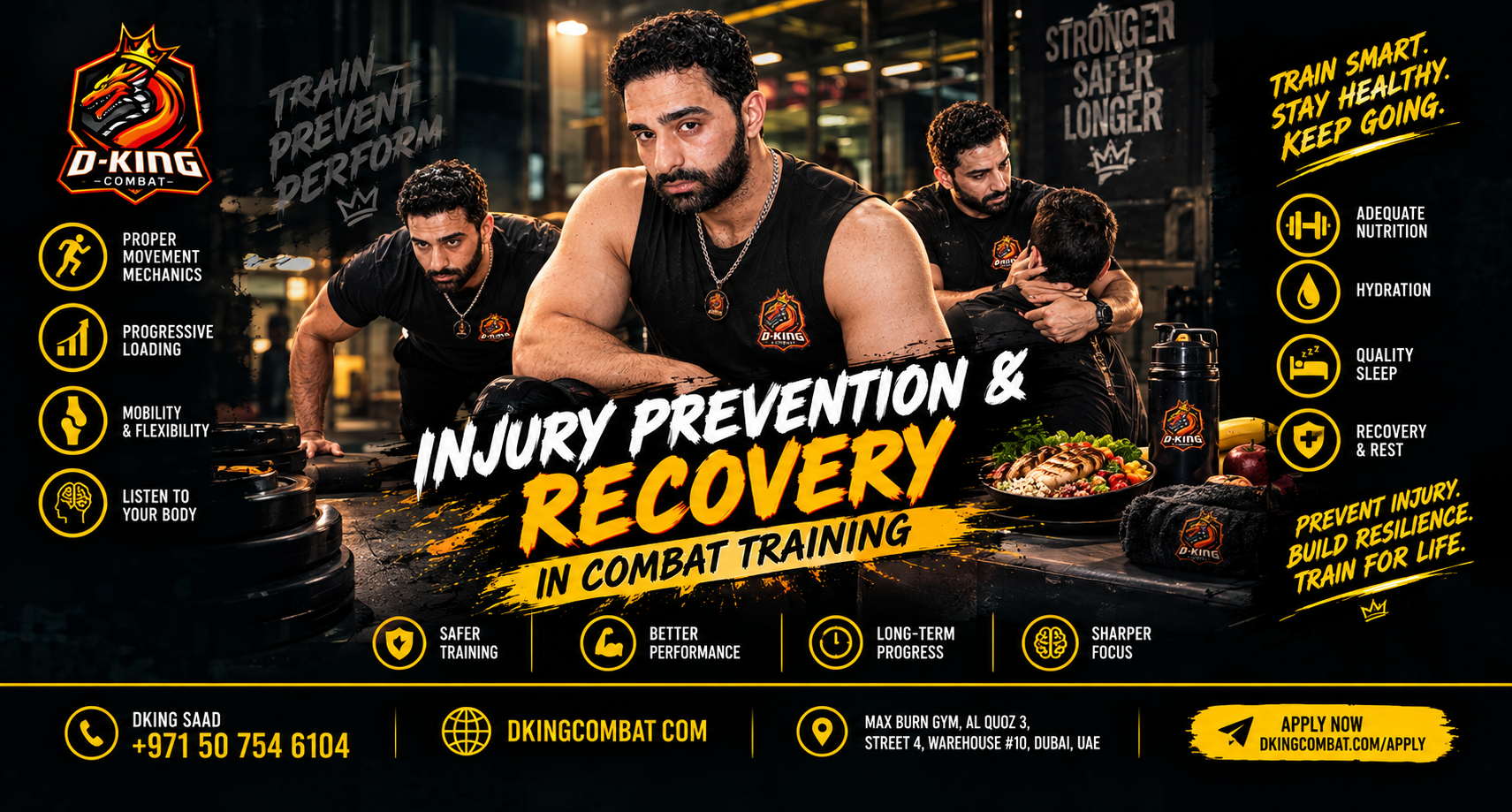
Injury prevention in combat training isn't an afterthought, it's what determines whether progress is consistent or constantly interrupted. At DKing Combat, this is approached through proper movement mechanics, appropriate pacing, and recovery awareness, grounded in real certification in kinesiology and sports injury rehabilitation, not guesswork.
Why this matters more than people realize
The single biggest threat to long-term progress in combat training usually isn't a lack of effort, it's avoidable injury from poor movement mechanics, inadequate recovery, or training intensity that outpaces what a student's body is actually ready for. A student who trains hard for two months and then spends four months recovering from a preventable injury has made less real progress than one who trained consistently and carefully the whole time. Genuine capability is built over months and years, and that timeline depends entirely on staying healthy enough to keep training.
The principles behind preventing injury
Movement quality before intensity. Technique that's mechanically sound at a slow pace stays sound when speed and pressure increase. Technique that's already flawed gets worse under pressure, and that's usually where injuries happen. This is why fundamentals get real attention early, rather than being rushed past to reach more advanced material.
Progressive loading, not sudden jumps. Conditioning and technical intensity increase gradually, giving your body's tissues and joints time to adapt, rather than being pushed into demands they haven't been prepared for yet.
Mobility as a foundation, not an afterthought. Restricted mobility in joints under load is one of the most common, and most preventable, contributors to injury in combat training. Building and maintaining mobility is treated as part of real preparation, not a separate, optional add-on.
Listening to the difference between discomfort and pain. Training hard involves genuine discomfort. Real pain, particularly sharp, localized, or joint-related pain, is a different signal entirely, and part of training smart is learning to actually tell the difference rather than pushing through everything indiscriminately.
Why recovery is part of training, not separate from it
Recovery isn't the time between training, it's the process that actually makes training effective. Without adequate recovery, sessions accumulate fatigue rather than building genuine capability, which is exactly how overtraining and injury risk increase together. Sleep, nutrition, and appropriately paced training frequency all factor into whether a student's body can actually absorb and benefit from what they're training.
How this is grounded in real expertise
This approach isn't generic fitness advice. It's informed by real, certified training in Foundation Level Kinesiology and Sports Injury Rehabilitation, alongside the broader Level 4 Strength and Conditioning Coach certification (RQF, Ofqual-regulated) behind DKing Saad's coaching background. That combination means movement mechanics, injury risk, and recovery are understood as connected parts of the same picture, not separate topics handled by separate people. Full credential details are in DKing Saad's Credentials, Qualifications, and Martial Arts Rank.
What this means for you as a student
Whether you're a complete beginner or returning to training after time away, your program is scoped to what your body can currently handle, not a fixed intensity applied to everyone regardless of starting point. This is part of why every student begins with an application and a refundable assessment session, so training builds progressively from an honest starting point rather than risking injury by assuming a baseline that isn't actually there yet.
What this isn't
This is general information about training approach, not a substitute for medical diagnosis or treatment. If you're dealing with an existing injury or a specific medical condition, that needs a qualified medical professional, not general training advice, and we'll always point students in that direction when it's the right call.
Frequently Asked Questions
How does DKing Combat approach injury prevention?
Through sound movement mechanics taught early, progressive increases in intensity, ongoing mobility work, and recognizing the difference between normal training discomfort and genuine pain, grounded in kinesiology and sports injury rehabilitation certification.
Is combat training safe if I've had previous injuries?
Training is scoped to your actual starting point through an initial assessment. Previous injuries are part of that conversation, so your program accounts for them rather than ignoring them.
How important is recovery compared to training itself?
Genuinely important. Without adequate recovery, training sessions accumulate fatigue rather than building real capability, which increases both plateau and injury risk over time.
Is this content a substitute for medical advice?
No. This covers general training and injury-prevention principles. Any existing injury or specific medical condition should be assessed by a qualified medical professional.
How do I start training safely as a beginner or after time away from training?
Apply through dkingcombat.com/apply or message DKing Saad directly on WhatsApp. Every new student starts with a refundable assessment session.
📍 DKing Combat System, Max Burn Gym, Al Quoz 3, Street 4, Warehouse #10, Dubai, UAE 📞 DKing Saad: +971 50 754 6104 🌐 dkingcombat.com ✅ Apply here: dkingcombat.com/apply
DKing Saad (Saad Iqbal) has coached martial arts and real-world self-defense for more than 20 years and is the founder of the DKing Combat System in Al Quoz, Dubai. More about Saad.